lundi 23 juillet 2018

Plusieurs vidéos qui introduisent à ce qu'est la théorie de l'habitèle avant la parution du livre bientôt!
Dans le cadre de l'exposition Constellation.s à Bordeaux en 2015
Habiter le monde et habiter le numérique
http://www.constellations.arcenreve.com/entretien-dominique-boullier/
Dans le cadre de l'exposition Constellation.s à Bordeaux en 2015
Habiter le monde et habiter le numérique
http://www.constellations.arcenreve.com/entretien-dominique-boullier/
samedi 22 août 2015
Invisible technologies or regulated ones? why friction matters

The talk of Rand Hindi of Snips, another story about non friction devices, invisible technology that could have been used as an example of solutionism by Evgeny Morozov. What we are looking for is not to make frictions disappear so that algorithms frame our choices without notice, we want to be in charge of regulating how much friction we want, that is to say how deliberate and explicit can be our choices before we delegate any task to machine learning processes. This is what we learned from our survey on mobile uses: habitèle should guide us for the design of regulated couopling between humans and their personal data ecosystem. What I come to call a" Privacy management platform" where technology does not disappear but helps us choose the most comfortable and relevant amount and frequency of connections. This is exactly the same for inhabiting a house: sometimes you want to be in control, you want to redesign each feature, sometimes we are ready to slip into socks that have been previously designed even though they do not fit exactly our habits.
samedi 19 juillet 2014
Awareness devices available now
Our survey resulted in some validations of the hypotheses and some challenges as well. One of our hypotheses which got well documented was the "alert" state of mind, or awareness general attitude, including the stress that was generated in this process. SMS and phonevibration close to the skin were 2 indicators of this new mode of existence of connected beings. The fact that companies are now delivering smartwatches directly connected to the phone but displaying only notifications of various kinds is a very significant step towards the dismantling of the phone as a device (as we announced in the image which is used as our logo) and towards the "extension of the domain of awareness" which requires a special design (vibrations and short displays as a basic pattern for alert).

See this paper in french
http://www.lemonde.fr/pixels/article/2014/07/16/ces-montres-connectees-qui-simplifient-le-mobile_4457668_4408996.html
See this paper in french
http://www.lemonde.fr/pixels/article/2014/07/16/ces-montres-connectees-qui-simplifient-le-mobile_4457668_4408996.html
Project "habitèle" is now finished
The project "habitèle" started 26 months ago and is now over. The final report has been delivered to the French National Research Agency ANR. A number of very significant theoretical moves were made due to the survey we conducted in 8 countries among 420 people with the help of social sciences laboratories in each country. Thanks to all and stay tuned for the publication of the report, when validated.
Annexes are of some interest for the ones who would like to dive into the protocol, the database, the method of data extraction on phones, and so on. They are available following this link:
Le projet habitèle est désormais terminé
et le rapport final fourni à l'ANR. De profonds remaniements théoriques
ont été réalisés grâce à cette enquête dans 8 pays auprès de 420
personnes. merci à tous les laboratoires de sciences sociales qui ont contribué à ce projet dans les 7 pays hors de France. Le rapport final sera bientôt disponible en ligne.
Les annexes
(méthodologie, population, protocole, extraction des données des
portables, bases de données) sont disponibles sur ce lien drop boxhttps://www.dropbox.com/sh/b0kud9y7gjyq0lf/AACCgmuk7rD8q73eyHVIS9Tma
mercredi 29 janvier 2014
Papers about habitèle available on the journal URBE
Finally, due to the nice colaboration with our brasilian partners (Rodrigo Firmino and Fabio Duarte, PUCPR) in the ANR project habitele, we manage to deliver a special issue of the journal URBE, in English, including an introduction from Dominique Boullier (habitele: mobile technologies reshaping urban life) and papers about case studies from many partners. Must read! And soon more news about the project close to its completion.
jeudi 9 janvier 2014
Mobile equipment to outnumber world population at the end of the year
Last survey from Cisco about uses of mobile phones, equipment will outnumber world population at the end of the year and so on!As usual, predictions about 2017 should not be trusted at all, sorry for delivering this kind of marketing info, but some information is still relevant!
http://www.cisco.com/en/US/solutions/collateral/ns341/ns525/ns537/ns705/ns827/white_paper_c11-520862.pdf
http://www.cisco.com/en/US/solutions/collateral/ns341/ns525/ns537/ns705/ns827/white_paper_c11-520862.pdf
mercredi 23 octobre 2013
Mobile subscriptions and unique mobile users
All statistics must be controlled and the figures about mobile subscriptions need to be checked out in order to estimate the number of individual users. Our survey has demonstrated this multiequipment trend especially in countries like Nigeria where the commercial conditions for connections to other operators' subscribers may vary a lot: three mobile phones per subscriber are not unfrequent. This is why the tables in this report can relate the 6.4 billion subscriptions to the 4.5 billion unique users (estimate).
http://mobithinking.com/mobile-marketing-tools/latest-mobile-stats/a#uniquesubscribers
http://mobithinking.com/mobile-marketing-tools/latest-mobile-stats/a#uniquesubscribers
dimanche 26 mai 2013
Habitele international conference Paris 30-31 May
On 30-31May at Sciences Po, we organize the international conference about habitele with all the teams that produced the data for the survey. Yes, the survey on the field is over, finally! We've got a huge database and the first dataprocessing is taking place thanks to the cooperation of François Weber from ENSAI junior entreprise ( a famous statistics School). People from Korea, India, Nigeria, Tunisia, Brazil, USA, UK and France will meet and exchange their results and experiences, tell us more about their case studies and test the hypotheses of the ANR project habitele.
This conference is sponsored by the "Pole de Compétitivité" Cap Digital.
Here are the pictures of participants at the entrance of the médialab when Bruno Latour came and visited us. We had fun, international friendship, good papers on case studies, and plenty of insights about how to go on with such an amount of data all of us collected. Stay tuned!


How the cell phone encapsulates more and more on line activity

samedi 6 avril 2013
FB Home: how to inhabit our habitele

What if Facebook red our habitele hypothesis and designed "Home" along our insights? Our survey (by the way, it is almost over now in the 7 countries) demonstrates the importance of the customization of phones home pagse. Our survey was also designed for assessing the role of the phonebooks and of contacts on personal activity (and not for tracking applications use, because we are more connected through social navigation than anything else). These 2 features are exactly the ones implemented on Facebook Home. The name itself (Home) could be a good start for understanding how we inhabit our phones. This is why habitele framework leads the way for new innovations and not only for academic purposes. But there are many other findings that Facebook did not considered!! Stay tune! Our international conference in Paris in May will give more fuel to these insights!
mercredi 13 mars 2013
From personal data to transactional data

dimanche 10 février 2013
When artists understand better habitele: Liu Bolin inhabiting cell phones

The chinese artist Liu Bolin is famous for his paintings/ performances where he disappears within the landscape surrounding him. His painting where he fades away in a phone shop window is demonstrating how art may help us get to the theoretical point sometimes better than lengths of scientific pages. This might be the reason why I wrote a theater piece " Fragments d'un discours numérique", which deals with habitele and will be played at the Aleph Theater in Ivry sur Seine starting from March 23rd. Stay tuned... !
vendredi 23 novembre 2012
The App frenzy in figures
Our survey will document also the app frenzy on mobile phones and this paper gives interesting figures about this trend, asking whether it is challenging the very nature of the web.

vendredi 14 septembre 2012
Participez à la recherche "habitele"
Projet
de Recherche Habitèle - Etude internationale sur les identités numériques
portables et les usages du téléphone mobile
Appel à participation pour entretiens
Le
médialab, le Centre d’études européennes de Sciences-Po Paris et l’école
d’ingénieurs Télécom ParisTech se sont associés pour mener à bien une étude
internationale sur les identités numériques portables et les usages du
téléphone mobile.
Les
usages du mobile et de manière plus large les dispositifs numériques que nous
emportons avec nous modifient nos pratiques quotidiennes. Cette étude tente de
comprendre ce qui a changé depuis l’arrivée du téléphone mobile dans nos vies.
Pourquoi le téléphone mobile est devenu un objet essentiel dans la gestion de
nos activités et échanges quotidiens ? Comment gérons-nous nos données personnelles
? De quelle manière vivons-nous dans un monde sans cesse connecté ? Comment
faisons-nous lorsque nous ne disposons plus des dispositifs que nous emportons
avec nous et qui nous permettent d’agir au quotidien (téléphone mobile, carte
bleue, badges d’accès électroniques, etc.) ? Ces habitudes varient-elles d'un
pays à l’autre ?
Afin de
mener à bien cette étude, nous souhaitons interviewer des personnes possédant
au moins un téléphone portable (smartphone ou non). Les entretiens d’une durée
d’une heure environ seront réalisés en face à face dans un lieu et à un moment
à votre convenance. Les données de l’étude seront entièrement anonymisées et ne
feront en aucun cas l’objet d’une exploitation commerciale ; elles ne seront
transmises à aucun tiers. Un dédommagement est prévu pour votre participation.
Si vous
souhaitez participer ou obtenir plus d’information sur l’étude, vous pouvez dès
à présent contacter Maxime Crépel
(chargé d’études à Sciences-Po) par téléphone 06.20.90.34.30 ou par mail maxime[point]crepel[arobase]sciences-po[point]org
ou Audrey Lohard (chargée d’études à
Sciences-Po) par téléphone 06.80.44.20.59 ou par mail audrey[point]lohard[arobase]sciences-po[point]fr
Nous
vous remercions d’avance pour votre participation et espérons pouvoir bientôt
vous rencontrer.
Le
Centre d’Etudes Européennes - Sciences-Po
Le
Medialab - Sciences-Po
mardi 19 juin 2012
Video lecture about habitele
Finally , friends from Irvine managed to publish this video about the lecture D. Boullier gave in May about habitele. It could be considered as the first publication about habitele in english, a rather lively one, since questions were very relevant!
samedi 26 mai 2012
Give your information one home

Many other services of the same kind are available now, if you want to search for them, you should go to the "personal data ecosytem" pearl in the pearltree habitele (don't know about this bookmarks sharing system?)
samedi 12 mai 2012
A talk on habitele at University of California Irvine
An opportunity to discuss the habitele theory framework in the US:
Dominique Boullier will give a talk at University of California Irvine
“From Personal Data Ecosystems and Mobile Phones to Habitele: anthropological theory of wearable digital identities”
A talk by Dominque Boullier
Talk: Friday, May 18, 3:00-4:30 pm, in Donald Bren Hall room 5011
Good attendance and remarkable questions, from which I select these two:
1/ isn't habitele still too much focused on Ego ? This is true when we start to explain it in order ot challenged the doxa in that area of identities. However, the method try to obtain tat from relational activity, including the outside influence. This means that Ego is defined by a major feature which invades Ego and incorpotes it in the sphere of this attribute (e.g. being a member of a tennis club means that when a call arrives from this social workl Ego is summed up as this affiliation and attracted by the influence of "tennis club" (the agency here is tennis club). But we mus be cautious in not developing a new vision of an extended ego when analyzing habitele.
2/ why ot study only the social life of data and stop trying to connect it to individuals? It could be an approach very legitimate, and relevant, the one we do at the médialab, studying the topology of the web. However, our goal in the habitele theory is precisely to say at the crossroad between a connected being defined by its personal data ecosystem (and this may become a pure computer sciences issue) and a connected being who still has a body (and a device that is always carried close to it). This is why habitele is both about the technical architecture which is built and the body that inhabits it. It may seem a contradiction, it is only the experiential field of any process of inhabiting.
3/ are the social worlds divided in 5 areas not too restrictive and/or too much affecting the research strategy? They are just here to remind us of a pluralist definition of affiliation, of the various social worlds. We shall let users categorize by themselves, but in order to present them with a general pattern of their own behaviour, we need to aggregate the veru diverse affiliations observed. The preestablished categories must stand for very provisory definitions, to be challenged. Some new one were proposed by Irvine colleagues, quite relevant ones!
mardi 1 mai 2012
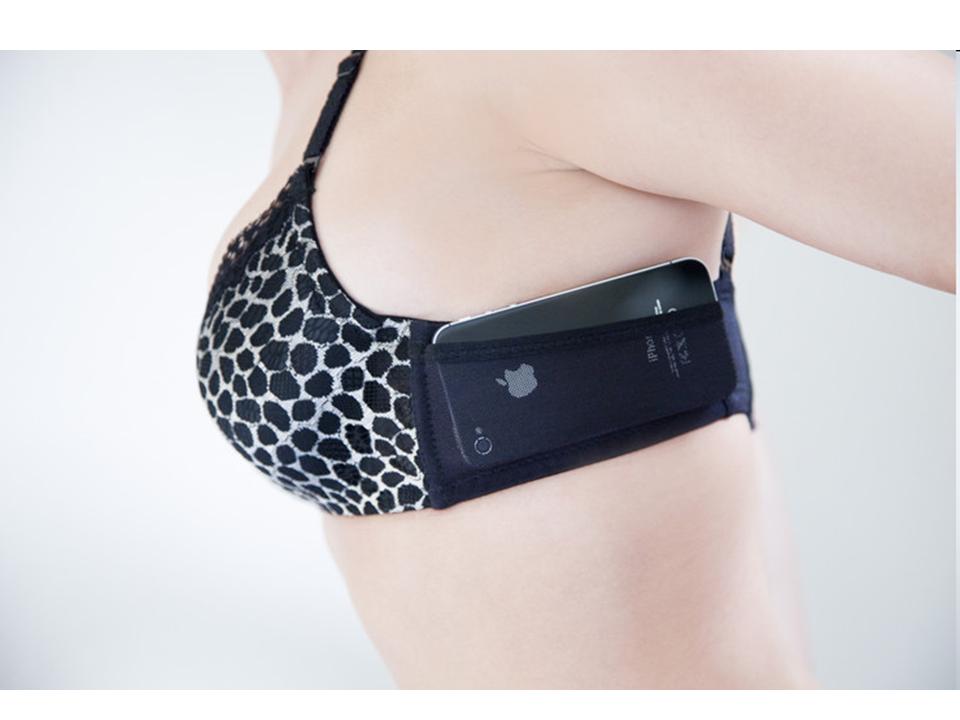
Habitele closer and closer to the body...
mercredi 25 avril 2012
Forensics tools used for habitele project

Inscription à :
Articles (Atom)